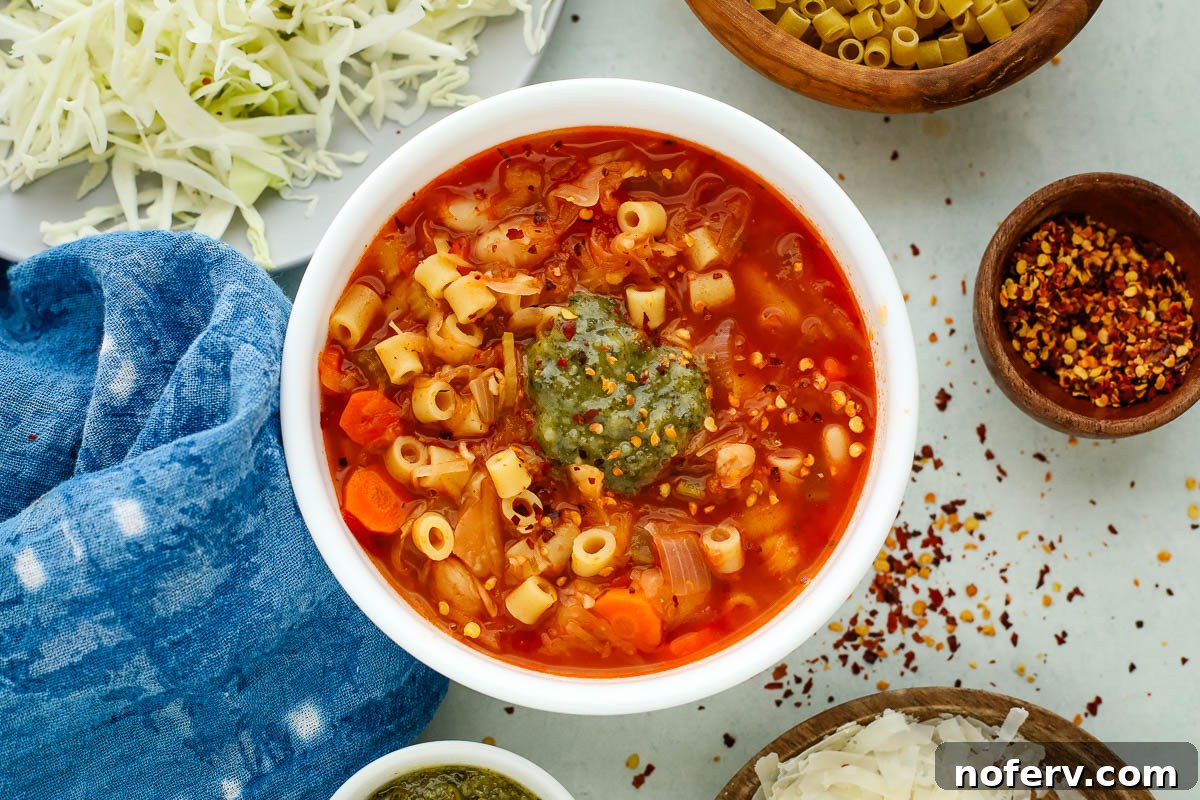
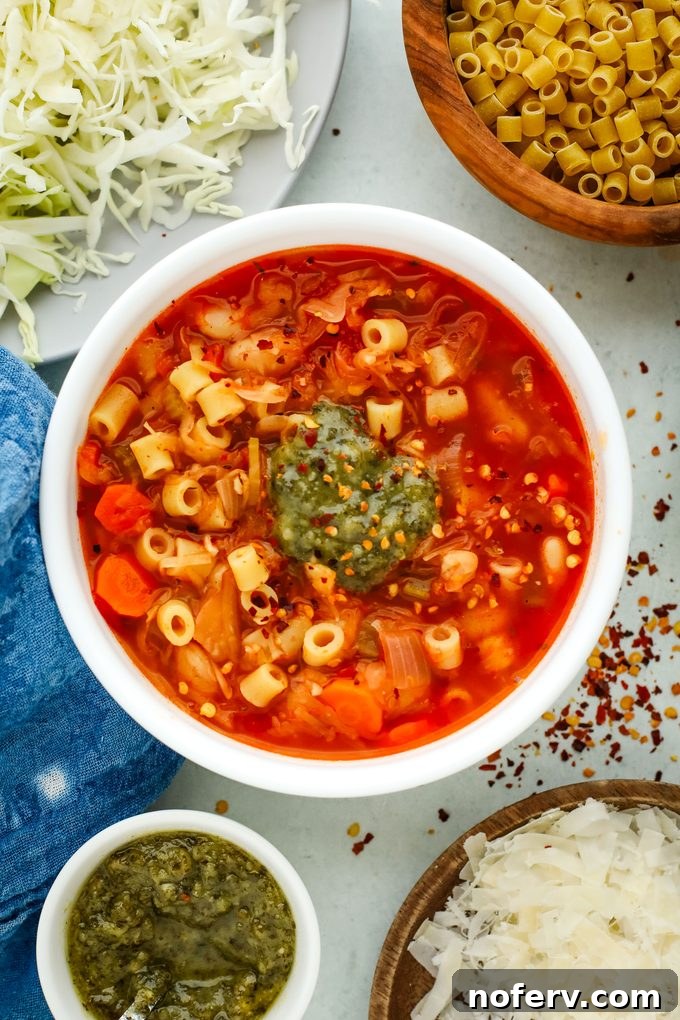
This easy winter minestrone is full of cabbage, carrots, cannellini beans, and ditalini pasta, finished with a spoonful of pesto. It’s a warming, vegetable-forward soup that’s satisfying and simple to make.
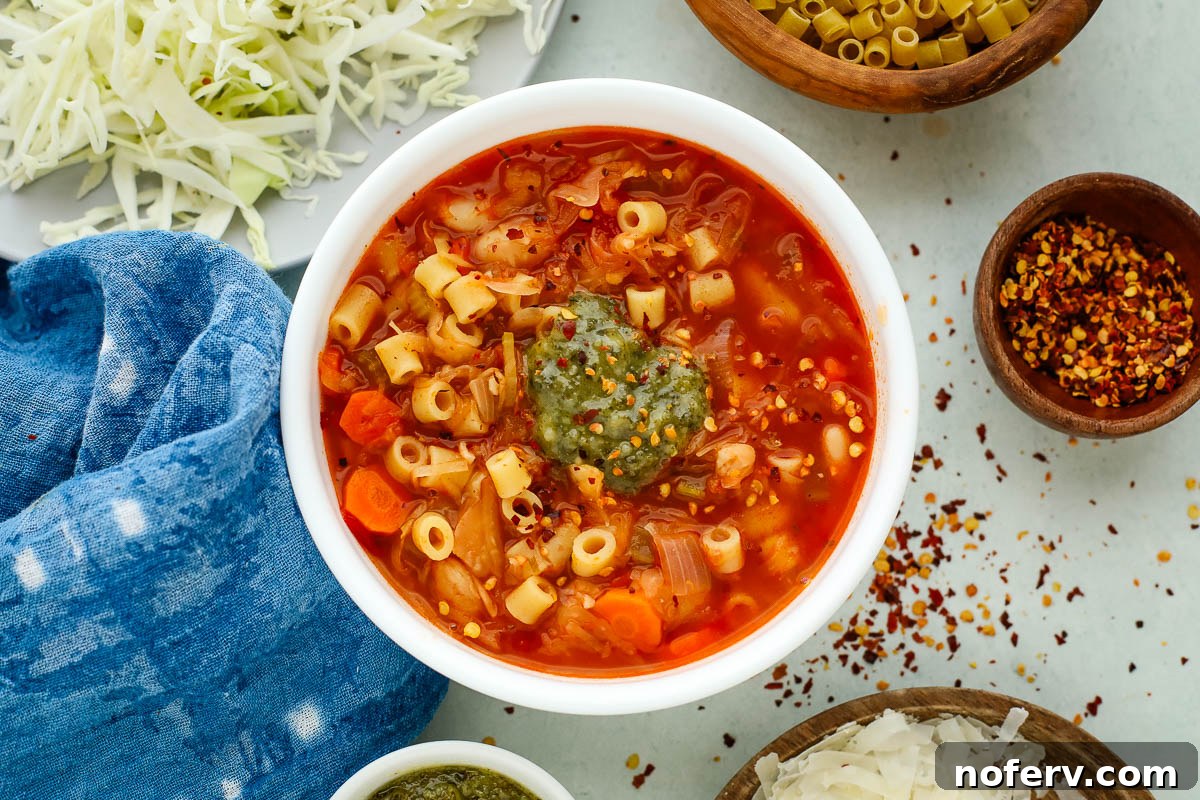
When the temperatures drop, this winter minestrone is my go-to. It’s a generous, vegetable-packed soup that combines tender cabbage, carrots, and celery with creamy cannellini beans and small pasta for body. A finishing spoonful of pesto adds freshness and a rich, herby boost. The result is a comforting bowl that’s easy to adapt, reheats well, and makes it simple to eat your vegetables.
What Makes This a Winter Minestrone?
Minestrone is an Italian vegetable soup whose ingredients shift by season. Summer minestrone often highlights zucchini and green beans; winter versions emphasize heartier produce that stands up to long simmering. This recipe centers on cabbage, carrots, celery, and onions, with canned tomatoes and cannellini beans adding body and depth. Rosemary and garlic provide savory aromatics, while the pesto stirred in at the end brings brightness and a touch of richness that ties the flavors together.
Ingredients & Substitutions
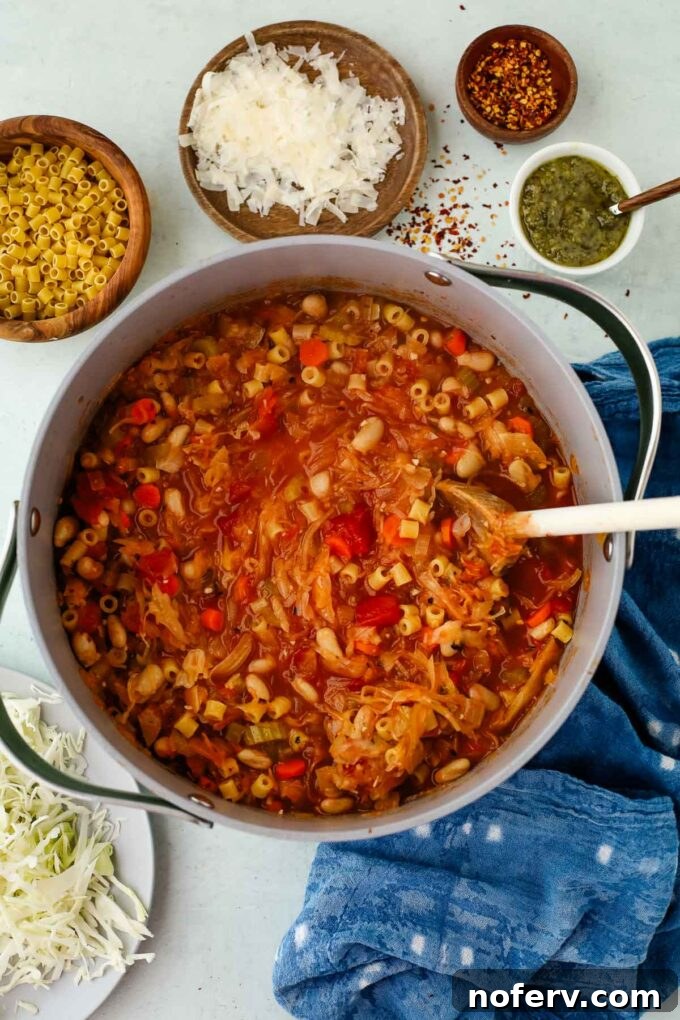
The base of this soup is a simple soffritto — olive oil, celery, carrots, and yellow onion — gently cooked until soft. Slow, patient sautéing for about 10–12 minutes builds a sweet, savory foundation without browning. The rest of the ingredients are flexible; swap where needed based on what you have.
- Dried rosemary: Use sparingly. If you prefer fresh rosemary, add a whole sprig and remove it before serving.
- Garlic: Five cloves are recommended for a pronounced but mellow garlic presence after cooking.
- Diced tomatoes: One 14-ounce can, drained. They give tomato flavor and acidity without overpowering the broth.
- Cabbage: About half a head, thinly sliced (roughly 4 cups). Savoy cooks fastest and becomes tender; green cabbage works fine with a few extra minutes of simmering.
- Vegetable broth and water: Three cups of broth plus three cups of water. Using part water helps avoid an overly salty final soup, especially after adding pasta and beans.
- Ditalini pasta: Small tubular pasta like ditalini is ideal, but any small shape (orzo, small shells, or elbows) will work.
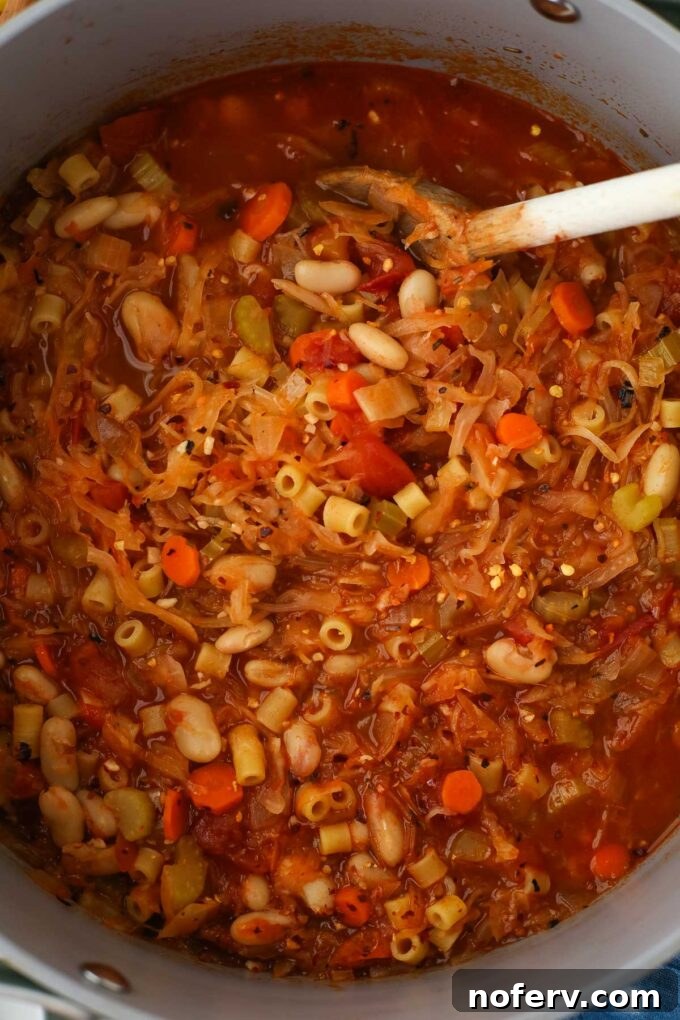
- Cannellini beans: One 14-ounce can, drained and rinsed. Their creamy texture makes the soup filling and protein-rich.
- Pesto: Stir in about 1/4 cup just before serving. Store-bought pesto works well, or use a simple parsley or walnut pesto if you prefer.
Tips for the Best Minestrone
- Always taste and adjust seasoning before serving. Broths vary widely in salt content, so add salt gradually at the end if needed.
- Don’t overcook the pasta. Stop cooking a few minutes before it’s done, then let the soup sit off the heat for about five minutes so the pasta finishes cooking without becoming mushy.
- For a creamier texture, blend half the beans with a cup of hot broth and stir the purée back into the pot. This thickens the liquid naturally without adding dairy.
- If you keep a parmesan rind in the freezer, toss it into the simmering broth to boost savory umami. Remove the rind before serving.
- If you plan to serve leftovers, remember that the pasta will absorb broth over time. When reheating, add a splash of broth or water to loosen the soup.
Substitutions and Variations
- Greens: Stir in chopped kale, Swiss chard, or spinach at the end. Kale benefits from the full pasta cooking time; spinach only needs a minute to wilt.
- Herbs: Use fresh thyme or add a bay leaf with the broth for a different herb profile.
- Beans: Swap cannellini for chickpeas or great northern beans if that’s what you have on hand.
- Pasta: Small shells, orzo, or elbow macaroni are fine substitutes for ditalini.
Storage and Freezing
Store leftovers in an airtight container in the refrigerator for up to four days. Because the pasta continues to absorb liquid, stir in a little broth or water when reheating. To freeze, cook the recipe through the simmer step (before adding pasta and beans), cool completely, and freeze for up to three months. When ready to eat, thaw, bring the soup to a simmer, then add freshly cooked pasta and the rinsed beans so texture stays pleasant — frozen cooked pasta tends to break down in quality.
What to Serve with Minestrone
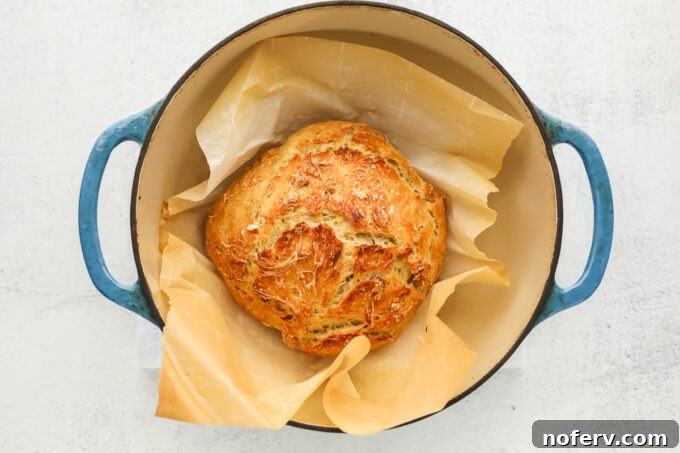
This minestrone is hearty enough to be a meal on its own, but it’s also lovely with crusty bread for dipping, a simple green or chopped salad for contrast, or roasted vegetables on the side. If you’d like extra protein, serve with a side of crusty high-protein bread or sprinkle grated parmesan on top (skip or replace with nutritional yeast for a vegan option).
Frequently Asked Questions
- Is this minestrone vegan? Yes — if you use a vegan pesto and omit any parmesan topping, the soup is vegan.
- Which cabbage is best? Savoy cabbage is tender and cooks quickly; regular green cabbage works well and may need a little more simmering time.
- Can I make the recipe gluten-free? Yes. Substitute your preferred gluten-free small pasta or use a legume-based pasta for added protein.

Winter Minestrone
- Author: Liz Thomson
- Prep Time: 10 minutes
- Cook Time: 50 minutes
- Total Time: 1 hour
- Yield: 10 cups
- Category: Soup
- Method: Stovetop
- Cuisine: Italian Inspired
- Diet: Vegetarian
Description
This easy winter minestrone is loaded with cabbage, carrots, cannellini beans, and ditalini pasta, then finished with pesto. It’s a hearty soup that makes eating vegetables effortless and delicious.
Ingredients
- 2 tablespoons olive oil
- 3 celery stalks, diced
- 2 medium carrots, diced
- 1 large yellow onion, diced
- 1/2 teaspoon dried rosemary
- Salt and pepper, to taste
- 5 garlic cloves, minced
- 1 (14-ounce) can diced fire-roasted tomatoes, drained
- 4 cups (about 12 oz) thinly sliced green cabbage
- 3 cups vegetable broth
- 3 cups water
- 1 cup ditalini pasta (about 4 oz)
- 1 (14-ounce) can cannellini beans, drained and rinsed
- 1/4 cup pesto (store-bought or homemade)
Instructions
- Heat the olive oil in a large pot over medium heat. Add the diced celery, carrots, and onion with the dried rosemary and a pinch of salt. Cook, stirring occasionally, for about 10–12 minutes until the vegetables are soft and slightly translucent.
- Add the minced garlic and cook for 1 minute until fragrant. Stir in the drained diced tomatoes and cook for an additional 2 minutes to marry the flavors.
- Add the thinly sliced cabbage and stir until it begins to wilt, about 3 minutes. Pour in the vegetable broth and water, bring to a simmer, and cook for 10 minutes to develop depth and meld the flavors.
- Add the ditalini pasta and the drained cannellini beans. Cook for 7–8 minutes, stirring occasionally to prevent sticking, until the pasta is almost al dente.
- Remove the pot from the heat and let it rest for 5 minutes so the pasta finishes cooking gently and the soup warms through. Taste and adjust seasoning with salt and pepper. Serve portions topped with a spoonful of pesto and, if desired, grated parmesan or a drizzle of good olive oil.


