Rediscovering Spaghetti Squash: Your Ultimate Guide to a Healthy Pasta Alternative
We all have those dietary cycles, don’t we? You find a culinary gem, indulge in it for weeks until it becomes a staple, then, almost inexplicably, it fades from your culinary radar. And just when you think you’ve exhausted all options, it reappears, fresh and exciting once more. For me, that forgotten, then rediscovered, delight is none other than the humble, yet extraordinary, spaghetti squash.
The Magic of Spaghetti Squash: A Wholesome & Delicious Swap
Let’s be clear: I have an enduring love affair with traditional pasta. The comforting embrace of a well-made spaghetti dish is truly unparalleled. It’s a classic for a reason. However, as a devout enthusiast of all things green and vibrant, I’m constantly on the lookout for ingenious ways to infuse more vegetables into my daily meals. And this is precisely where spaghetti squash shines brightest – it offers the delightful texture and versatility of pasta, but with an impressive nutritional profile that makes it a guilt-free indulgence.
If you’ve yet to experience the wonders of spaghetti squash, prepare to have your culinary world rocked. It might look a tad imposing in its raw, elongated form, but don’t let its exterior fool you. Preparing it is surprisingly straightforward, and the rewards are absolutely worth it. It’s not just a vegetable; it’s an experience, transforming into delicate, pasta-like strands that perfectly cradle your favorite sauces.
Unlocking Its Nutritional Power: Why Spaghetti Squash is a Smart Choice
Beyond its incredible ability to mimic pasta, spaghetti squash is a nutritional powerhouse. It’s naturally low in calories and carbohydrates, making it an excellent choice for those following keto, low-carb, or weight-management diets. Packed with essential vitamins and minerals, including Vitamin C, Vitamin B6, and manganese, it supports overall health and well-being. Furthermore, its high fiber content aids digestion, promotes satiety, and helps regulate blood sugar levels, contributing to sustained energy throughout your day. Swapping out traditional pasta for spaghetti squash means you’re not just enjoying a delicious meal, but actively nourishing your body with every forkful. It’s a smart, flavorful way to boost your vegetable intake without sacrificing taste or satisfaction.
Mastering Spaghetti Squash Preparation: Simple Methods for Perfect Strands
One of the greatest appeals of spaghetti squash is its adaptability in the kitchen. Whether you’re short on time or prefer a hands-off approach, there’s a cooking method that will suit your needs. Here’s a breakdown of the most popular and effective ways to coax those wonderful strands from its sturdy shell, ensuring you get perfect, pasta-like results every time.
The Quick & Easy Microwave Method
This is my go-to for speed and simplicity, especially on busy weeknights. It’s virtually foolproof and delivers perfectly tender squash every time, making it an ideal choice when time is of the essence.
- Preparation: Carefully slice the spaghetti squash in half lengthwise. A sharp, sturdy knife is essential here, and watch your fingers!
- Seed Removal: Using a spoon, scoop out all the seeds and fibrous bits from the center. You want the cavity to be clean and smooth.
- Water & Plate: Place the squash halves cut-side down on a microwave-safe plate. Add about 1/4 to 1/2 inch of water to the plate. This clever trick creates steam, helping the squash cook evenly and become wonderfully tender from the inside out.
- Cover & Cook: Loosely cover the plate with plastic wrap, leaving a small vent to allow steam to escape. Microwave on high for 10-15 minutes, depending on the size of your squash. Larger squash may require a few extra minutes to reach optimal tenderness.
- Check for Doneness: The squash is ready when the flesh is easily pierced with a fork. It should feel tender, but not mushy. If it’s still firm, simply microwave for another 2-3 minutes until it reaches your desired consistency.
- Fork It Out: Once cooked, carefully remove the squash (it will be hot!). Let it cool for a few minutes to handle comfortably. Then, using a fork, gently scrape the insides. The flesh will naturally separate into beautiful, delicate, spaghetti-like strands – it’s truly magical!
Baking for Enhanced Flavor & Texture (Oven Method)
While the microwave is undeniably quick, baking your spaghetti squash can yield a slightly richer, more caramelized flavor. This method is perfect if you have a little more time and want to infuse your squash with extra depth, especially if you roast it with a touch of oil and seasoning.
- Preparation: Preheat your oven to 400°F (200°C). Carefully slice the squash in half lengthwise and scoop out all the seeds and fibrous bits, just as you would for microwaving.
- Seasoning: Drizzle the cut sides with a little olive oil, then season generously with salt and black pepper. For an extra flavor boost, consider adding garlic powder, onion powder, or a sprinkle of Italian seasoning.
- Roasting: Place the squash halves cut-side down on a baking sheet. You can add a small amount of water to the baking sheet to help create some steam, or simply roast them directly on the sheet for a more roasted texture.
- Bake: Roast for 40-60 minutes, or until the flesh is tender when pierced with a fork. The cooking time will vary significantly based on the size of your squash, so check for doneness periodically.
- Serve: Once cooked, let it cool slightly before handling. Then, use a fork to scrape out the strands, just like with the microwave method. The slightly browned edges will add a wonderful depth of flavor.
Beyond Basic: Creative Serving Ideas for Your Spaghetti Squash
Now that you’ve mastered the art of cooking spaghetti squash, it’s time to unleash your creativity in the kitchen. The beauty of these versatile strands is how readily they adopt the flavors of whatever you pair them with. Move beyond the obvious and explore a world of delicious possibilities that will keep your meals exciting and healthy.
Classic Marinara & Nutritional Yeast: A Plant-Based Power Duo
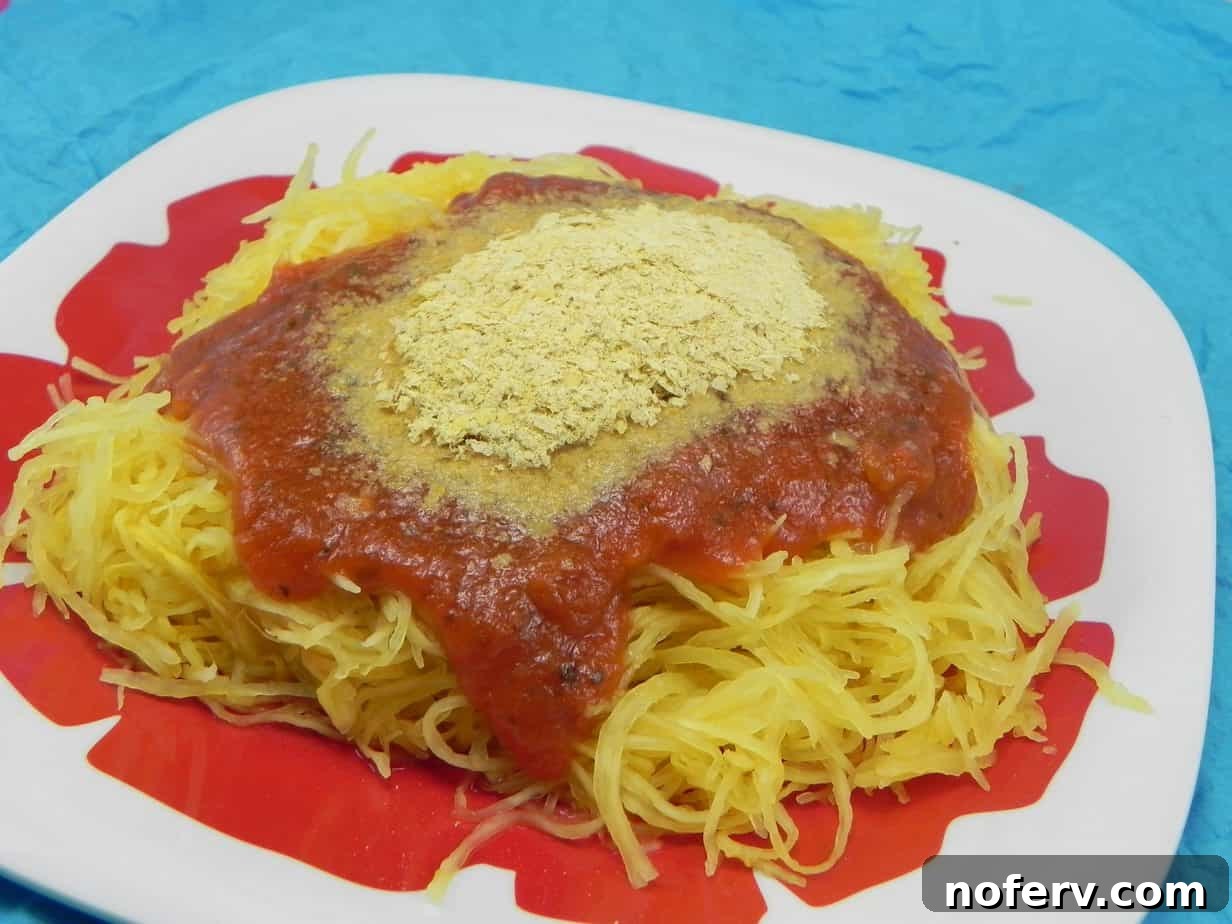
My absolute favorite way to enjoy spaghetti squash, and the one pictured here, is undeniably simple yet incredibly satisfying. I simply topped a massive plate of these golden strands with a vibrant store-bought marinara sauce – Trader Joe’s brand is a personal favorite for its rich flavor – and a generous sprinkle of nutritional yeast. The combination is pure culinary bliss, offering a delightful twist on a traditional pasta dish.
This massive plate of spaghetti squash wasn’t just a pretty picture; it was my entire meal, and yes, I savored every single strand! Nutritional yeast, for those unfamiliar, is a fantastic plant-based ingredient that adds a cheesy, umami flavor to dishes, along with a boost of B vitamins. It’s an absolute game-changer for vegan and vegetarian cooking, transforming simple vegetables into gourmet experiences and providing a delicious, savory kick.
More Inspiring Spaghetti Squash Recipes:
- Pesto Perfection: For a quick and fresh meal, toss warm spaghetti squash with your favorite homemade or store-bought pesto, sun-dried tomatoes, and toasted pine nuts. A squeeze of lemon juice brightens it further.
- Mediterranean Medley: Combine the squash strands with roasted red peppers, Kalamata olives, crumbled feta cheese (or a vegan alternative), and a light lemon-herb dressing for a vibrant and zesty dish.
- Spaghetti Squash Boats: A fun and impressive way to serve! Fill the hollowed-out squash halves with a mixture of ground turkey or lentils, a medley of sautéed vegetables, and your favorite cheese, then bake until bubbly and golden.
- Creamy Alfredo Alternative: Craving comfort? Create a dairy-free “Alfredo” sauce using cashew cream or silken tofu, and toss it with the squash for a rich, comforting dish that feels indulgent without the heaviness.
- Asian Stir-Fry Noodles: Use spaghetti squash strands as a base for your favorite stir-fry. Sauté them with soy sauce (or tamari), fresh ginger, garlic, sesame oil, and an array of colorful vegetables like bell peppers, broccoli, and snap peas.
- Breakfast Hash Base: Don’t limit it to dinner! Use leftover spaghetti squash as a low-carb base for a hearty breakfast hash with scrambled or fried eggs, diced peppers, onions, and your choice of spices.
Exploring the World of Winter Squashes: Beyond Spaghetti
My affection for spaghetti squash is profound, but it often sparks a delightful internal debate: which winter squash reigns supreme? Is it the delicate strands of spaghetti squash, or the sweet, creamy texture of butternut squash? Each has its own unique charm and culinary applications, offering distinct flavors and textures that make them incredibly versatile in the kitchen.
Butternut Squash: A Sweet & Versatile Cousin
Butternut squash is another star of the winter squash family, widely celebrated for its naturally sweet, nutty flavor and smooth, creamy texture when cooked. Unlike spaghetti squash, it doesn’t break into strands but rather becomes soft and luscious, making it perfect for a variety of comforting dishes:
- Heartwarming Soups: A classic butternut squash soup, often enhanced with ginger or curry, is a warming, comforting staple, especially during cooler months.
- Delicious Roasting: Cubed and roasted with herbs like rosemary and thyme, it makes a fantastic, naturally sweet side dish that pairs well with almost any main course.
- Smooth Purees: Its creamy texture makes it ideal for purees, which can be added to risottos, rich pasta sauces, or even baked goods like muffins and breads.
- Hearty Salads: Roasted butternut squash adds a wonderful sweetness and tender texture to substantial grain salads, like a quinoa salad with apples and cranberries.
Ultimately, choosing between spaghetti and butternut squash often comes down to the desired texture and the specific dish you’re creating. Spaghetti squash excels at mimicking pasta and soaking up sauces, while butternut offers a richer, sweeter profile ideal for purees, creamy dishes, and robust side dishes.
Other Notable Winter Squashes to Explore:
The world of winter squash is incredibly diverse, each offering unique culinary possibilities. Don’t be afraid to branch out!
- Acorn Squash: Easily recognizable by its distinct acorn shape and dark green, ribbed skin. It has a sweet, slightly fibrous yellow-orange flesh, and is often baked whole or halved and stuffed with savory or sweet fillings.
- Delicata Squash: With its thin, edible skin and sweet, delicate flavor reminiscent of sweet potatoes, delicata squash is fantastic roasted into rings. Its small size also makes it very easy to prepare.
- Kabocha Squash: Often called “Japanese pumpkin,” it has a remarkably sweet flavor and a fluffy, somewhat drier texture than butternut. It’s excellent for tempura, hearty stews, or simply roasted.
- Pumpkin: While primarily associated with pies, many varieties of pumpkin are wonderful for savory dishes, soups, and roasting. Don’t limit it just to fall desserts!
Each variety offers a unique flavor and texture profile, inviting you to explore and expand your culinary horizons. Experimenting with different squashes can add exciting new dimensions to your plant-forward cooking.
Life’s Transitions: Embracing New Beginnings and Healthy Habits
Beyond the delightful world of squash, life is currently buzzing with another significant development: I’m moving tomorrow! It feels like I’ve been talking about it for ages, but the actual moving day is finally here, bringing with it a mix of anticipation and a healthy dose of chaos. The excitement is palpable; my two future roommates are absolutely wonderful, and I’m looking forward to building a new home and creating fresh memories in our shared space.
Moving is more than just changing addresses; it’s an opportunity for a fresh start. It’s a chance to reassess habits, declutter both physical space and mental baggage, and envision the kind of life you want to cultivate in your new environment. As I embark on this new chapter, I’m focusing on maintaining the healthy eating habits I cherish, finding new local farmers’ markets, and setting up a kitchen that inspires delicious, plant-forward meals. A new space often brings a renewed sense of purpose, and I’m eager to see what culinary adventures await in my new kitchen.
Essential Moving & Packing Hacks for a Smooth Transition
As I dive headfirst into the packing frenzy, I’m reminded of the sheer volume of “stuff” one accumulates over time! Moving can be incredibly stressful and overwhelming, but with a few strategic tips and a bit of planning, it can be a much smoother and less daunting process. If you’ve got any wisdom to share, please send it my way – I’m all ears for tried-and-true moving hacks!
Before You Pack: Declutter & Organize for Success
- Purge Ruthlessly: This is arguably the most critical step. Before you pack a single box, go through every item in your home. Ask yourself: Have I used this in the last year? Does it bring me joy? Do I truly need it? Donate, sell, or discard anything that doesn’t make the cut. Less stuff to move means less work, less cost, and less clutter in your new home.
- Take Inventory of Valuables: Especially for highly valuable or sentimental items, consider taking photos or making a detailed list. This can be helpful for insurance purposes, or simply to keep track of your most cherished possessions.
- Gather Quality Supplies: Stock up on sturdy moving boxes of various sizes (small for heavy items, large for light), high-quality packing tape, bubble wrap, packing paper, markers, and labels. Don’t skimp on quality; cheap boxes or tape can lead to frustrating disasters on moving day.
Packing Strategies for Maximum Efficiency & Protection
- Pack by Room & Label Clearly: This cannot be stressed enough. Label each box clearly with its intended room in the new house and a brief, descriptive list of its contents (e.g., “Kitchen – Pots & Pans,” “Bedroom 1 – Linens & Towels”). Numbering boxes and keeping a master list can also be a lifesaver for tracking.
- The “First Night” Essentials Box: Prepare a separate, clearly marked box with absolute necessities that you’ll need immediately upon arrival. This should include toiletries, a change of clothes, any essential medications, phone chargers, a basic set of dishes/cutlery, coffee/tea supplies, pet essentials, and important documents. Keep this box with you, not on the moving truck.
- Heavy Items in Small Boxes: Books, canned goods, and other heavy items should always go into smaller boxes. This prevents them from becoming too heavy to lift safely and reduces the risk of the box breaking open.
- Light Items in Large Boxes: Conversely, linens, pillows, towels, and lightweight kitchen gadgets can fill larger boxes without making them unwieldy.
- Protect Fragiles with Care: Wrap delicate items individually in packing paper or bubble wrap. For extra cushioning and to save on packing materials, use soft items like towels, blankets, or even clothes to pad around dishes and glassware. Pack plates vertically like records for better shock absorption.
- Keep Important Documents Safe & Accessible: Create a separate folder or small box for critical documents like passports, birth certificates, insurance policies, medical records, and moving contracts. Keep this folder with you, ideally in your car or carry-on, so it’s never out of your sight.
Moving Day & Unpacking: Settling into Your New Home
- Confirm Logistics: Double-check all timings and details with your movers or helpers, and ensure you have clear directions and easy access to both your old and new locations.
- Stay Hydrated & Fueled: Moving is physically demanding. Have plenty of water, coffee, and easy-to-eat snacks on hand for yourself and anyone helping. A quick pizza order on moving day is practically a tradition for a reason!
- Delegate Tasks Wisely: If you have friends or family helping, assign specific roles to keep things organized and efficient. One person can direct boxes, another can assemble, etc.
- Set Up Utilities in Advance: Ensure electricity, water, gas, and internet are set up and working in your new home before you arrive. There’s nothing worse than moving into a dark, cold house without Wi-Fi.
- Unpack Strategically: Start with your essentials box, then tackle the kitchen (so you can eat and drink!), and the bedrooms (for a good night’s sleep). Having a functional kitchen and a comfortable bed will make the first few days much easier. Don’t feel pressured to unpack everything at once; take your time and unpack gradually.
- Change Your Address: Update your address with the post office, banks, credit card companies, utility providers, and any other important institutions.
Wish me luck with the final stretch of packing! Every little bit of advice helps make this transition smoother and less stressful. I’m eager to embrace this new chapter!
Share Your Thoughts & Tips!
I’d love to hear from you, my wonderful readers! Are you a spaghetti squash enthusiast, perhaps a devoted fan of another winter squash variety? Do you have a go-to recipe that transforms this humble vegetable into something extraordinary? Share your culinary secrets, favorite preparations, and insights in the comments below!
And for those who have navigated the exciting, albeit sometimes daunting, journey of moving, what are your ultimate tips for packing, unpacking, and settling into a new home? Any golden nuggets of advice – from saving time to saving your sanity – would be greatly appreciated as I prepare for tomorrow’s big adventure!
Happy Friday, friends! Wishing you a weekend filled with delicious food and smooth transitions, wherever life may be taking you.
<3 Liz