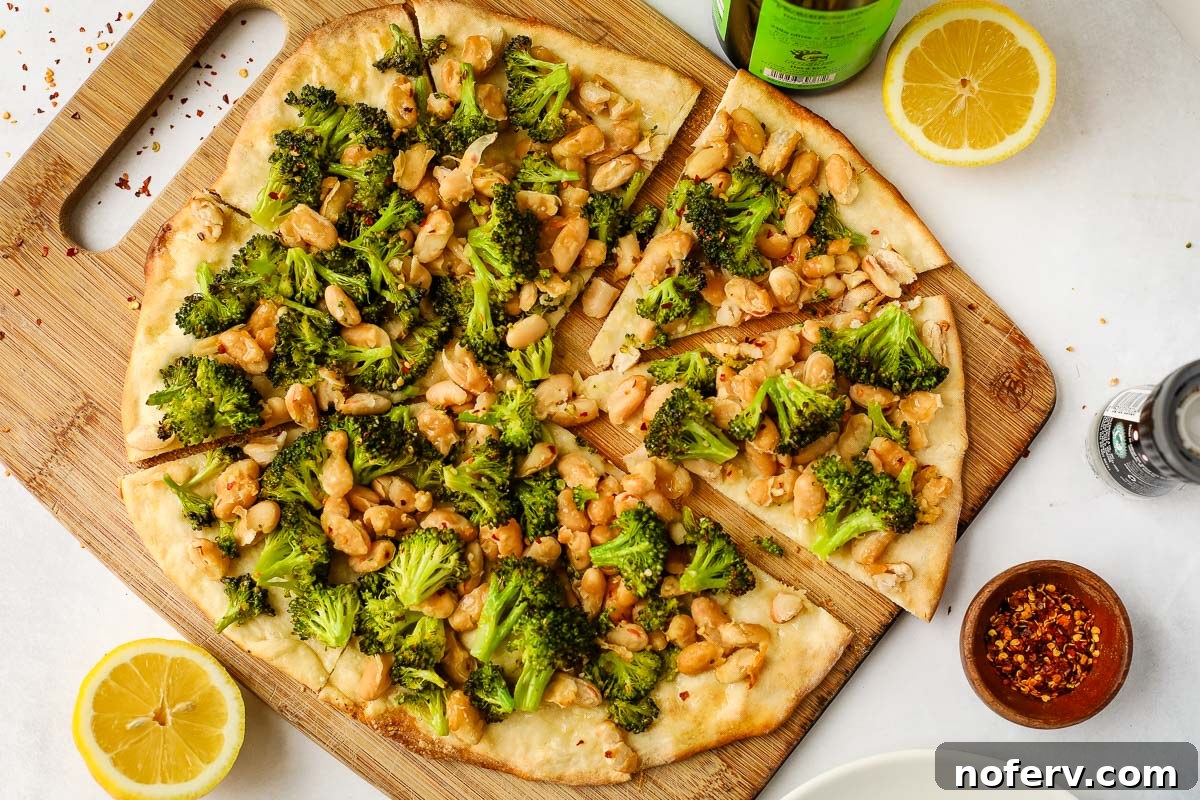
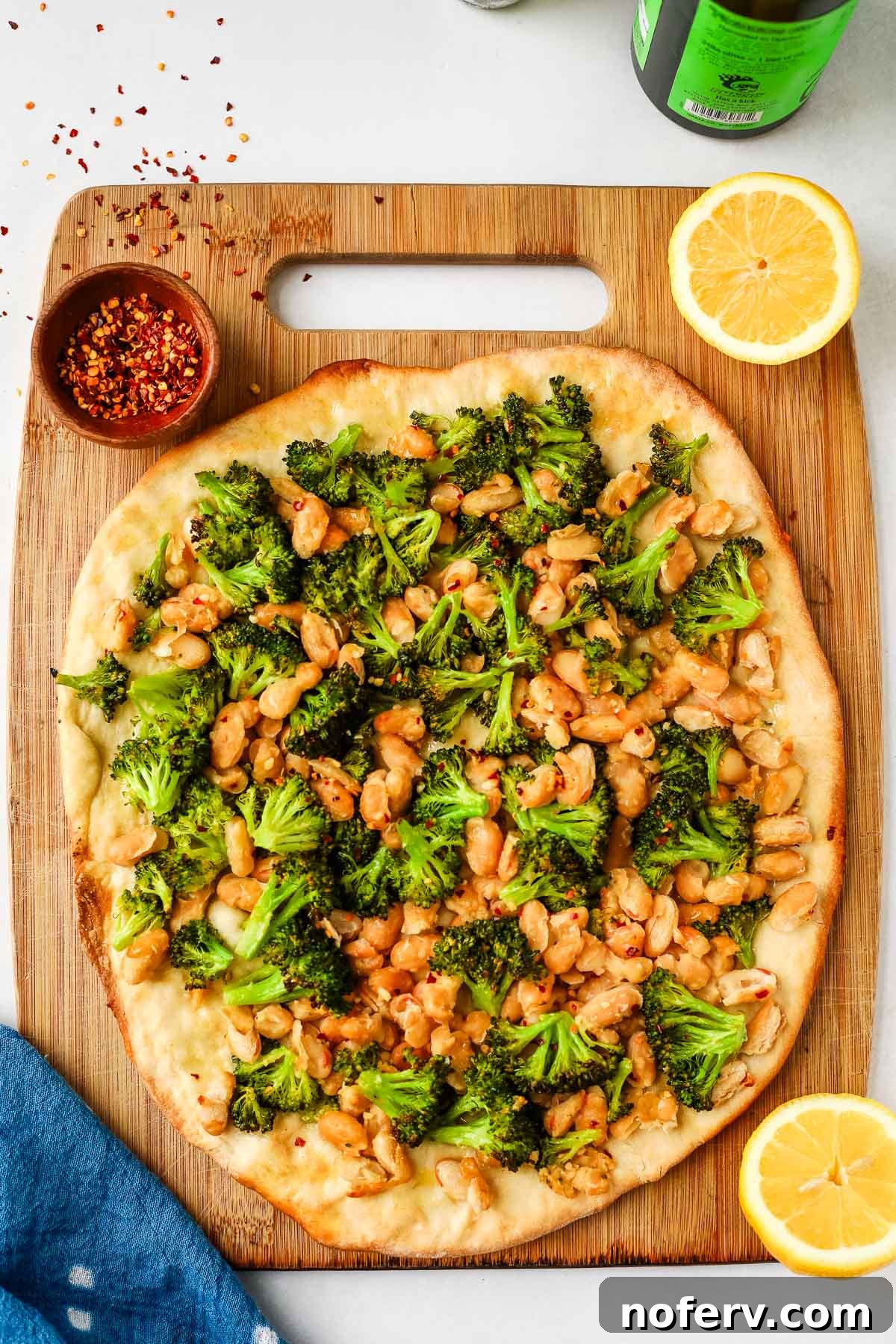
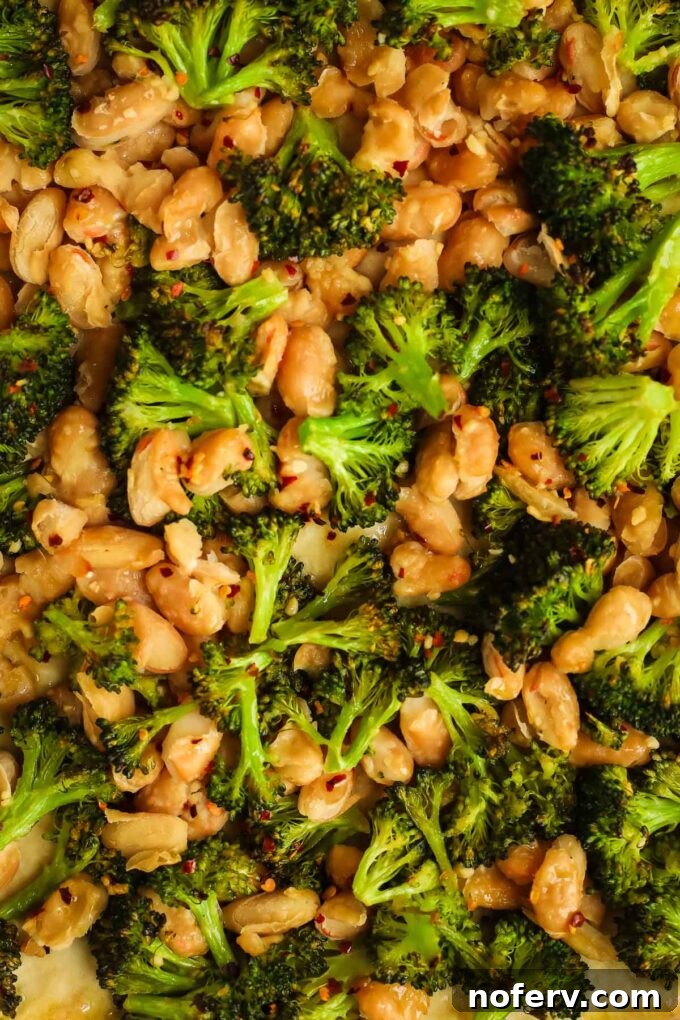
You’re about to discover your new favorite weeknight meal: a vibrant, flavorful, and incredibly satisfying Vegan Broccoli Pizza. This recipe proves that plant-based eating doesn’t mean sacrificing taste or texture. Imagine a perfectly crispy pizza crust piled high with tender, garlicky broccoli florets and creamy cannellini beans, all brightened with a hint of red pepper flakes and fresh lemon zest. It’s a wholesome, hearty, and utterly delicious alternative to traditional pizza, packed with nutrients and bursting with fresh flavors. Whether you’re a seasoned vegan or simply looking to incorporate more vegetables into your diet, this easy-to-make pizza is a guaranteed crowd-pleaser that will leave you feeling light yet completely satisfied.
Why This Vegan Broccoli Pizza is a Must-Try for Healthy Eating
There are those evenings when only pizza will do, but you also crave something that feels wholesome, lighter, and brimming with the goodness of fresh vegetables. This vegan broccoli pizza perfectly bridges that gap, offering a guilt-free indulgence that doesn’t compromise on flavor or satisfaction. My inspiration for this delightful dish stems from a beloved local restaurant, 8 1/2, known for its exceptional vegan white bean pizza. Their version traditionally features broccoli rabe, a wonderful vegetable with a slightly bitter, earthy flavor that many adore. While I’ve certainly enjoyed crafting it with broccoli rabe, its availability can sometimes be a challenge for home cooks. Opting for regular broccoli not only makes this recipe more accessible to everyone but also introduces a milder, subtly sweet flavor that beautifully complements the other ingredients, appealing to a broader palate.
Instead of relying on heavy cheeses to achieve richness and satisfaction, this recipe masterfully employs cannellini beans and high-quality olive oil. These humble ingredients work in harmony to create a truly hearty and filling topping that’s surprisingly indulgent without being overly caloric. The cannellini beans, often called white kidney beans, provide an incredibly creamy texture when lightly mashed, lending a delightful counterpoint to the tender, garlicky broccoli. Their mild, slightly nutty flavor acts as a fantastic canvas, absorbing the aromatic notes of garlic and the gentle warmth of red pepper flakes. A few pinches of those vibrant red pepper flakes are crucial, delivering just the right touch of heat to awaken your palate without overwhelming it, creating a subtle warmth that lingers pleasantly. And the secret weapon, a generous scattering of fresh lemon zest at the very end, performs a culinary miracle, brightening every single flavor and adding an exquisite, tangy finish that elevates the entire pizza experience. It’s this thoughtful combination of textures and tastes, from the crispy crust to the creamy beans and zesty finish, that makes this plant-based pizza truly special and irresistibly delicious.
Choosing the Perfect Pizza Crust for a Crispy Base
The foundation of any great pizza is its crust, and for this vegan broccoli and white bean delight, you have several excellent options that cater to various skill levels and time constraints. The beauty of this recipe is its versatility, allowing you to choose a crust that suits your needs without compromising on flavor or texture.
My absolute top recommendation is to use homemade pizza dough. There’s truly nothing quite like the experience of biting into a homemade crust – it offers that ideal balance of crispy edges, a delightfully chewy interior, and a rich, yeasty flavor that store-bought versions often struggle to replicate. If you’re a fan of baking and have a little extra time on hand, making your own dough from scratch is incredibly rewarding and will elevate your pizza to restaurant-quality status. Homemade dough also allows you to control the ingredients, ensuring a truly plant-based foundation. Typically, about ½ pound (approximately 225 grams) of fresh dough is perfect for stretching into a 12-inch round, creating a medium-thin crust that holds up beautifully to the flavorful toppings.
However, we all lead busy lives, and sometimes convenience is key. For those moments when you’re short on time but still crave homemade goodness, a good quality store-bought pizza dough is an excellent alternative. Many grocery stores now offer fresh pizza dough in their refrigerated sections, often near the deli or dairy products. These fresh doughs are usually a step above the pre-baked or frozen varieties, offering better flavor and a more pliable texture. When selecting store-bought dough, always check the ingredient list to ensure it’s vegan-friendly, as some may contain dairy or eggs. If you opt for a pre-baked or partially baked crust, simply keep an eye on it and adjust your baking time accordingly to prevent it from becoming overly crisp or dry. Always check the package instructions, as some pre-made crusts require a slightly different cooking approach. No matter your choice, ensure your dough is at room temperature before stretching to make it more pliable and easier to work with, which helps prevent tearing and ensures an even crust.
Fresh vs. Frozen Broccoli: Achieving Optimal Texture for Your Pizza
When it comes to the star vegetable of this pizza, broccoli, the choice between fresh and frozen can significantly impact the final texture of your dish. For optimal results and a truly superior pizza experience, fresh broccoli is highly recommended. Fresh broccoli maintains a more desirable crisp-tender texture when sautéed, preventing it from becoming mushy or overly soft during the cooking process and subsequent baking in the oven. Its vibrant green color also adds an appealing visual element to the pizza, making it look as good as it tastes. The florets hold their shape better, providing a satisfying bite that complements the creamy beans and crispy crust.
However, life happens, and sometimes frozen broccoli is all you have on hand – and that’s perfectly fine! With a couple of simple adjustments, frozen broccoli can absolutely work in a pinch. The key to successfully using frozen broccoli is to thaw it thoroughly before cooking. You can do this by leaving it in the refrigerator overnight, placing it in a colander under cold running water, or even a quick defrost in the microwave. Once thawed, it’s crucial to pat the broccoli florets as dry as possible using a clean kitchen towel or several layers of paper towels. This step is vital because excess moisture from the frozen broccoli can release during cooking, leading to a watery pizza topping. A watery topping can then seep into the pizza crust, resulting in an undesirable soggy base – a texture no one wants! By removing as much moisture as possible, you ensure your topping remains flavorful and doesn’t compromise the crispness of your crust.
The good news is that because the broccoli is briefly cooked in a skillet with garlic and red pepper flakes before being added to the pizza, it gets a head start on becoming perfectly tender without the risk of overcooking once it goes into the hot oven. This pre-cooking step ensures that regardless of whether you start with fresh or properly prepared frozen broccoli, you’ll end up with beautifully cooked florets that are just right – not too hard, not too soft, but with that ideal bite that complements the creamy beans and crispy crust.
Step-by-Step Guide: How to Make Broccoli and White Bean Pizza
Crafting this vegan broccoli and white bean pizza is straightforward, making it perfect for both novice and experienced home cooks. Follow these simple steps for a truly delicious result, bringing this vibrant plant-based dish to your table in no time.
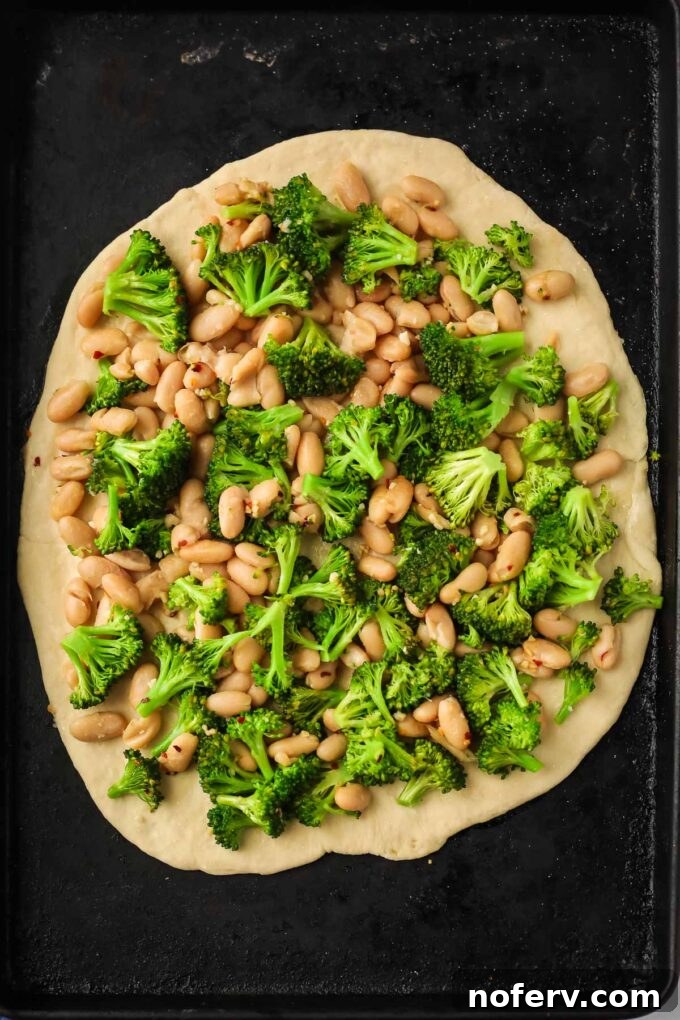
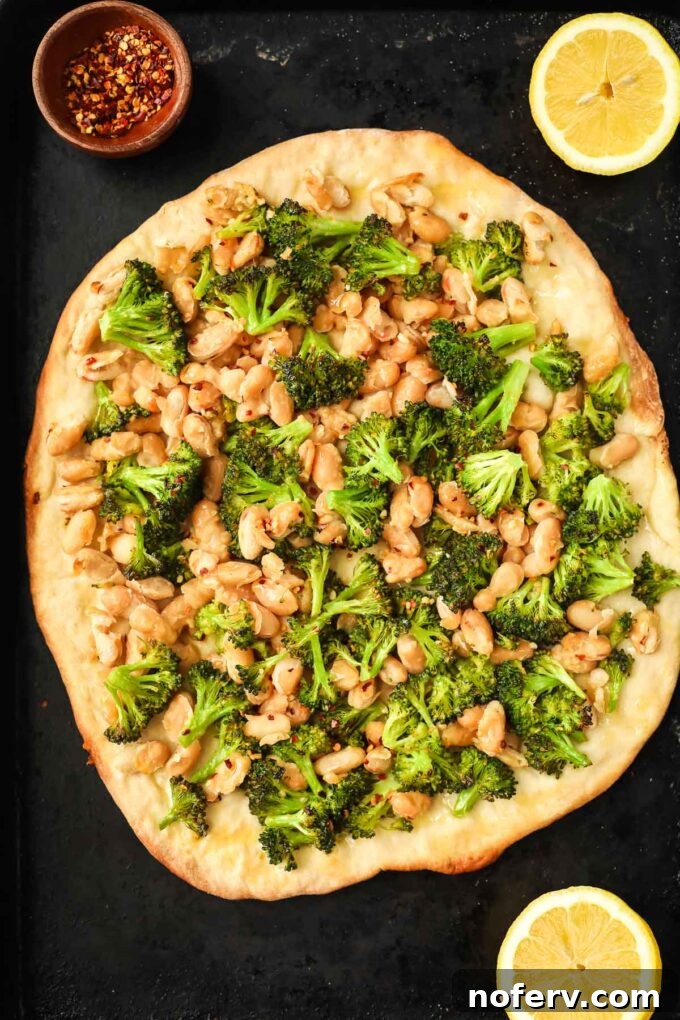
Essential Tips for Making the Best Vegan Broccoli Pizza
Achieving a perfect homemade pizza, especially a plant-based one, involves a few key techniques. Follow these essential tips to ensure your vegan broccoli and white bean pizza turns out absolutely delicious every time, with a perfectly crispy crust and flavorful toppings.
- Preheat the Oven Fully: This seemingly small step is absolutely critical for achieving a professional-quality pizza crust. A scorching hot oven, preheated to its full temperature (475°F or 245°C) for at least 20-30 minutes, helps the crust cook quickly and evenly. This rapid cooking creates that desirable crispy, golden-brown exterior and a fluffy interior, preventing a soggy or undercooked base. Don’t rush this step; insufficient preheating is a common culprit for lackluster pizza crusts.
- Utilize a Pizza Stone or Steel for Superior Crispness: If you’re fortunate enough to own a pizza stone or steel, now is the time to use it. Place it in the oven while it preheats. The stone or steel absorbs and retains a tremendous amount of heat, which is then transferred directly to the pizza dough upon contact. This mimics the intense heat of a brick oven, resulting in an exceptionally crispy crust that is truly restaurant-worthy. If you don’t have one, an inverted heavy-duty baking sheet or cast-iron pan can work as a decent substitute, providing a solid, hot surface for the dough.
- Avoid Overloading the Pizza: While it might be tempting to pile on extra toppings, resist the urge! Overloading your pizza, especially with watery vegetables, can lead to a soggy crust and an unevenly cooked result. Spread the broccoli and bean mixture in a single, even layer, ensuring good contact with the dough. This allows the heat to circulate properly, ensuring both the crust and toppings cook through perfectly and the steam can escape, leading to a crispier finish.
- Don’t Skip the Lemon Zest for a Bright Finish: This might seem like a minor flourish, but fresh lemon zest is a game-changer for this vegan pizza. Sprinkling it generously over the hot pizza immediately after baking adds an incredible burst of bright, fresh, and tangy flavor. It cuts through the richness of the olive oil and beans, lifts the garlicky notes, and adds a zesty finish that truly makes the entire pizza shine. It’s the perfect finishing touch that elevates the dish from good to unforgettable, adding that essential touch of acidity and freshness.
Health Benefits of This Plant-Based Pizza
Beyond its fantastic flavor and ease of preparation, this vegan broccoli pizza is a powerhouse of nutrition, making it an excellent choice for a healthy meal. Each ingredient contributes significantly to its wholesome profile:
- Broccoli: This cruciferous vegetable is celebrated for being exceptionally rich in vitamins C and K, as well as fiber and various potent antioxidants. Vitamin C is crucial for immune function, while Vitamin K plays a vital role in bone health and blood clotting. The fiber content aids in digestion and helps maintain gut health.
- Cannellini Beans: The creamy base of our topping, cannellini beans, are an incredible source of plant-based protein and dietary fiber, contributing significantly to satiety (making you feel full longer) and supporting healthy digestion. They also provide essential minerals like iron, magnesium, and folate, which are important for energy production and overall cellular health.
- Olive Oil: Used for sautéing, olive oil is a heart-healthy fat, rich in monounsaturated fatty acids and antioxidants. These components are known to help reduce inflammation and support cardiovascular health.
Combined, these ingredients create a meal that is naturally dairy-free, cholesterol-free, and loaded with beneficial plant compounds. It’s a smart and delicious way to enjoy a comforting pizza while nourishing your body with wholesome, natural ingredients that contribute to overall well-being. This pizza is not just tasty; it’s genuinely good for you!
Creative Variations and Substitutions for Your Vegan Broccoli Pizza
This vegan broccoli pizza recipe is wonderfully adaptable, offering plenty of room for culinary creativity. Feel free to experiment with these ideas to tailor it to your taste preferences, incorporate seasonal ingredients, or simply use what you have on hand in your pantry and fridge. Customizing your pizza is part of the fun!
- Add More Veggies: Enhance the vegetable content and color by incorporating thinly sliced mushrooms, vibrant bell peppers (red, yellow, or orange), fresh spinach (wilt it into the broccoli mixture at the very end of sautéing), or juicy cherry tomatoes (halved and scattered before baking). Roasted red peppers, either homemade or from a jar, could also add a sweet and smoky depth.
- Spice it Up: For those who love a bit more heat, you can easily increase the amount of red pepper flakes in the sautéed mixture. Alternatively, consider adding a tiny pinch of cayenne pepper for a more even heat distribution. A drizzle of sriracha or a sprinkle of chopped fresh jalapeños over the pizza after baking would also be fantastic for a fresh, fiery kick.
- Herb Power: Fresh herbs can transform the flavor profile and add a delightful aroma. Try adding chopped fresh basil, oregano, or parsley to the broccoli and bean mixture after it’s cooked, or sprinkle them generously over the pizza immediately after it comes out of the oven. Rosemary or thyme could also add an earthy note.
- Different Beans: While cannellini beans provide a lovely creamy texture, other white beans like great northern beans or even slightly mashed chickpeas could be used as a substitute, offering a slightly different flavor and texture profile.
- Nutritional Yeast for Cheesiness: If you miss a “cheesy” flavor on your plant-based pizza, sprinkle a tablespoon or two of nutritional yeast evenly over the topping before baking. It imparts a savory, umami flavor that beautifully mimics cheese without any dairy, making your pizza even more satisfying.
- Toasted Nuts or Seeds for Crunch: A light sprinkle of toasted pine nuts, chopped walnuts, or even sunflower seeds over the finished pizza can add a delightful crunch and extra richness, enhancing the overall texture experience.
- Different Crust Flavors: Consider adding herbs like dried oregano or garlic powder directly to your pizza dough (if making homemade) or brushing the crust with herb-infused olive oil before baking for an extra layer of flavor.
Serving Suggestions for Your Delicious Vegan Broccoli Pizza
This flavorful vegan broccoli and white bean pizza is hearty enough to stand alone as a complete and satisfying meal, making it an ideal choice for a weeknight dinner. However, it also pairs beautifully with a simple side dish or two to create a more elaborate and well-rounded dinner experience. For a delightful and balanced meal, consider serving your pizza alongside these options:
- A Fresh Green Salad: A light, crisp green salad with a vibrant vinaigrette dressing would provide a refreshing contrast to the warm, savory pizza. Think mixed greens, sliced cucumbers, cherry tomatoes, and maybe some thinly sliced red onion for a bit of bite. The freshness and acidity of the salad will cut through the richness of the pizza toppings.
- Light Soup: A simple vegetable broth-based soup or a creamy tomato soup (ensure it’s dairy-free, of course) would complement the pizza perfectly, especially on a cooler evening. The warmth and liquid of the soup offer a comforting addition to your meal.
- Vegan Garlic Knots or Breadsticks: If you’re feeling extra indulgent and want to maximize the “pizza night” experience, whip up some homemade or store-bought vegan garlic knots or breadsticks. They’re perfect for dipping in any leftover olive oil or just enjoying alongside the main event.
- Roasted Vegetables: For an extra boost of nutrients and flavor, a side of simply roasted vegetables like asparagus, zucchini, or bell peppers could be a wonderful addition.
Storing and Reheating Leftovers for Continued Enjoyment
While this vegan broccoli pizza is undoubtedly best enjoyed fresh from the oven when the crust is at its crispiest and the flavors are most vibrant, any leftovers can be stored and reheated for another delicious meal. Proper storage and reheating techniques are key to maintaining the pizza’s quality and ensuring you can savor its flavors for days to come.
- Storage: Allow the pizza to cool completely to room temperature before storing. This prevents condensation from building up, which can make the crust soggy. Once cooled, transfer individual slices or the entire leftover pizza to an airtight container. You can also wrap slices tightly in aluminum foil or plastic wrap before placing them in a container. Store in the refrigerator for up to 3-4 days.
- Reheating in the Oven (Recommended for Crispness): For the best results, especially if you want to revive that crispy crust, reheat slices in a preheated oven. Place your oven rack in the middle and preheat the oven to 350°F (175°C). Place the pizza slices directly on a baking sheet or, even better, a preheated pizza stone or steel. Reheat for about 5-10 minutes, or until the crust is crispy again and the toppings are warmed through. Keep an eye on it to prevent overcooking.
- Reheating in a Skillet (Quick Crisp Method): If you’re reheating just a slice or two, a dry skillet can work wonders. Place the pizza slice in a non-stick skillet over medium heat. Cook for 2-3 minutes until the bottom is crispy. Then, add a few drops of water to the pan (away from the pizza) and immediately cover the skillet with a lid for about 1 minute. The steam created will help warm the toppings and melt any vegan cheese (if added) without making the crust soggy.
- Microwave (Not Recommended for Crust Crispness): While convenient for speed, microwaving will result in a softer, chewier crust rather than a crispy one. If you’re in a hurry and texture isn’t your top priority, microwave individual slices for 30-60 seconds, or until warmed through.
More Delicious Plant-Based Pizza Recipes to Explore
If you’ve fallen in love with this vegan broccoli and white bean pizza and are eager to explore more vibrant plant-based pizza creations, you’re in luck! There’s a whole world of vegetable-packed pizzas waiting to be discovered, offering endless possibilities for flavor and nutrition. Whether you’re craving creamy textures, hearty roasted vegetables, or a fresh flatbread, there’s a plant-forward pizza for every occasion.
If you’re looking for a non-vegan option that still highlights the incredible versatility of broccoli, my ricotta broccoli pizza offers a creamy, cheesy delight that perfectly balances the savory notes of broccoli with a rich, dairy base. However, for those firmly on the plant-based path or simply looking for another fantastic vegan choice brimming with garden-fresh goodness, be sure to try my vegan flatbread recipe. This recipe is loaded with a colorful array of seasonal vegetables, making it a light yet satisfying meal perfect for lunch or a quick dinner. And for those who simply can’t get enough of piling on the veggies and appreciate the depth of flavor that comes from roasting, my roasted vegetable pizza is another perennial family favorite. It features an abundance of caramelized, flavorful roasted vegetables that bring a sweet and savory complexity to every bite. Each recipe brings its unique twist to the beloved pizza, ensuring there’s always a new, exciting flavor adventure on your plant-based culinary journey.
Recipe Card: Vegan Broccoli and White Bean Pizza

Vegan Broccoli Pizza
- Author: Liz Thomson
- Prep Time: 5 minutes
- Cook Time: 25 minutes
- Total Time: 30 minutes
- Yield: 1 pizza (serves 4)
- Category: Dinner
- Method: Oven
- Cuisine: American
- Diet: Vegan, Plant-Based
Pin Recipe
Description
This vegan broccoli pizza is a simple, satisfying, and incredibly flavorful dinner! Tender, garlicky broccoli and creamy cannellini beans are piled onto a crispy pizza crust and finished with bright lemon zest for a truly memorable plant-based meal. It’s quick to prepare and perfect for any weeknight.
Ingredients
- 1 (12-inch) pizza crust or 1/2 pound (approx. 225g) pizza dough
- 2 tablespoons olive oil
- 3 garlic cloves, minced
- 1/4 teaspoon red pepper flakes (plus more to taste)
- 1 pound (approx. 450g) fresh broccoli, stems removed and cut into 1-inch pieces
- 1 (15 oz / 425g) can cannellini beans, rinsed and drained
- 1/2 teaspoon salt
- Fresh lemon zest, for finishing
Instructions
- Preheat your oven to 475°F (245°C). If you are using a pizza stone or steel, place it in the oven during preheating to ensure it gets extremely hot.
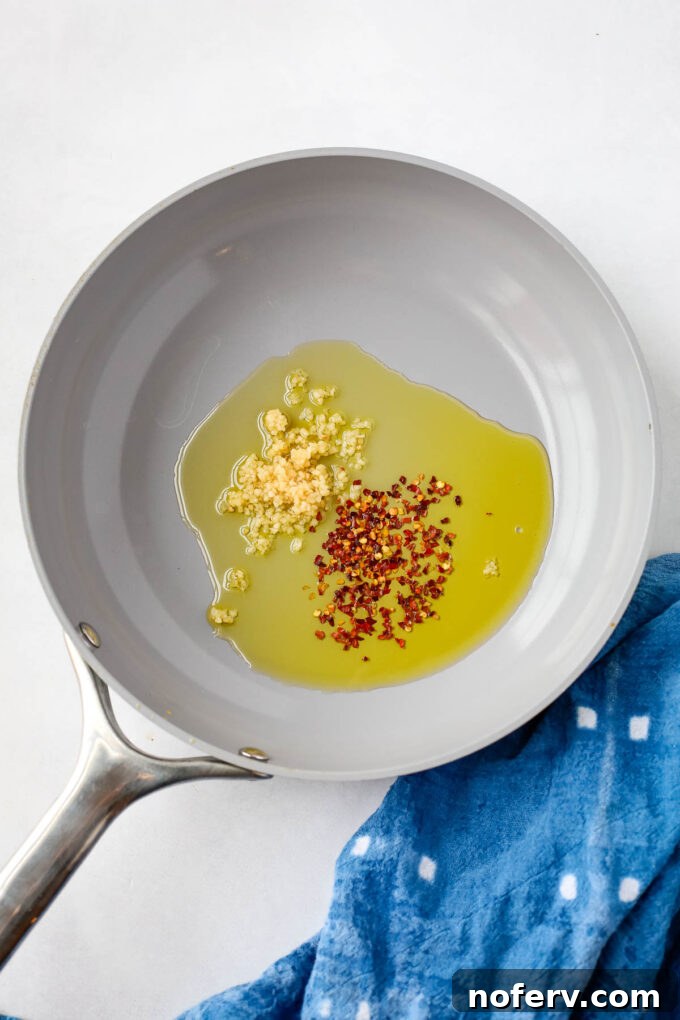
- Heat the olive oil in a large skillet over medium heat. Add the minced garlic and red pepper flakes and cook for 1–2 minutes until the garlic is fragrant and lightly golden (be careful not to burn it, as burnt garlic can taste bitter).
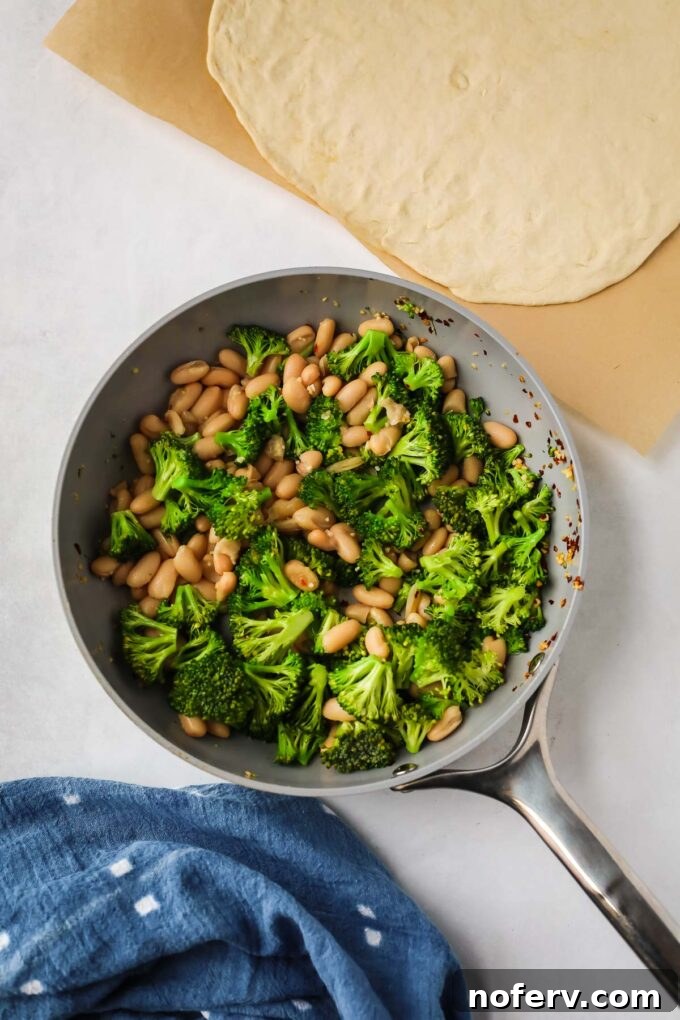
- Stir in the broccoli florets, drained cannellini beans, and salt. Continue to cook for 4–6 minutes, stirring occasionally, until the broccoli becomes tender-crisp and turns a vibrant bright green. The beans will also warm through. Remove the skillet from the heat.
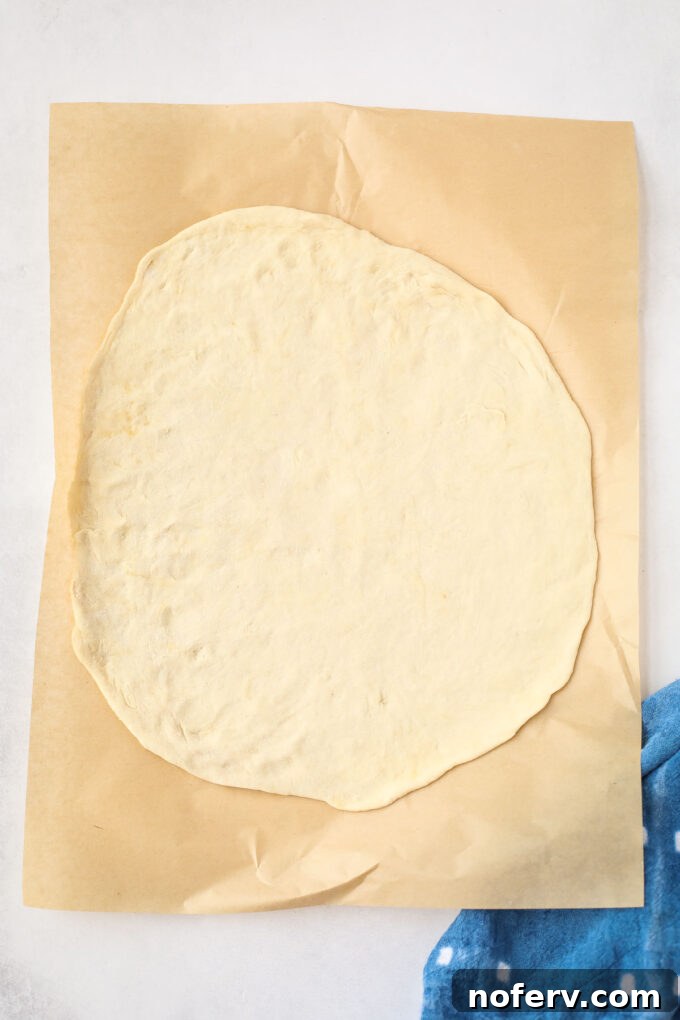
- On a lightly floured surface, stretch or roll your pizza dough into a 12-inch round. Carefully transfer the dough to a greased baking sheet or onto your preheated pizza stone (use caution if placing dough directly on a hot stone).
- Evenly spread the cooked broccoli and bean mixture over the prepared pizza dough, leaving a small border (about 1/2 inch) for the crust.
- Bake for 10–12 minutes, or until the pizza crust is beautifully golden brown and wonderfully crispy at the edges. Cooking time may vary slightly depending on your oven and crust thickness.
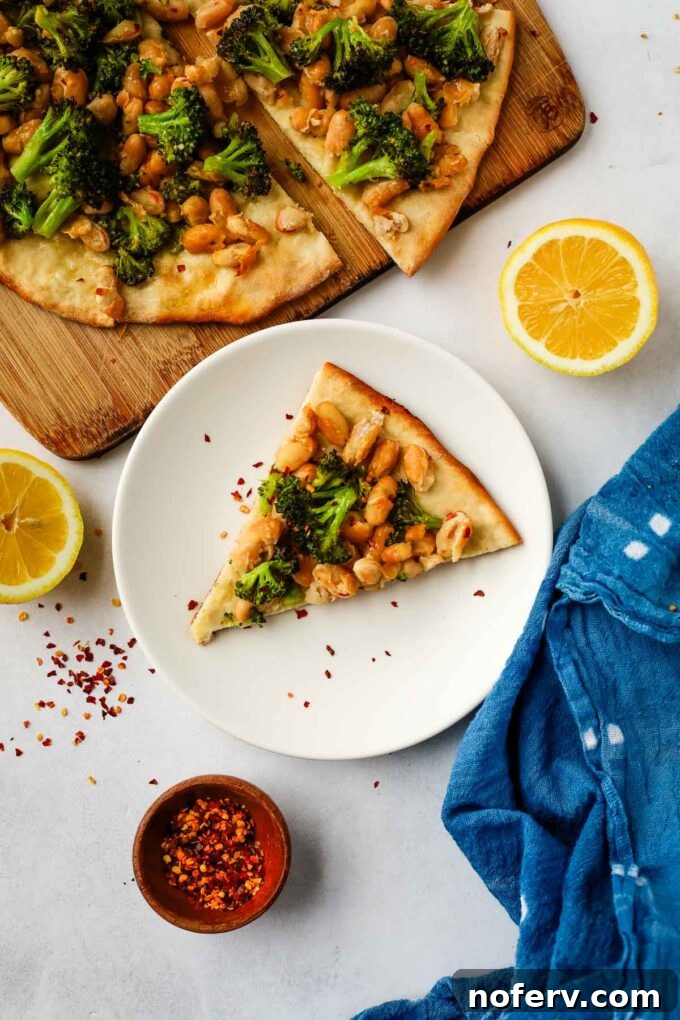
- Once baked, immediately remove the pizza from the oven. Finish by grating fresh lemon zest generously over the top. Add additional red pepper flakes if you desire more heat and a spicier kick. Slice into wedges and serve hot.