The world of fitness tracking has evolved dramatically since its nascent stages. I first delved into wearable technology in 2010, when options were rudimentary: bulky devices strapped to the upper arm, capable only of basic calorie burn estimates after manual synchronization with a computer. Fast forward to today, and these devices have transformed into sophisticated health companions. For several years, my go-to brand was Fitbit, but a recent transition led me to Garmin. This experience has provided a unique perspective, allowing me to meticulously weigh the advantages and disadvantages of both leading brands.
Both Fitbit and Garmin boast extensive portfolios of fitness trackers and smartwatches, catering to a wide range of preferences and needs. While covering every model would be impractical, this comparison will focus on my personal experiences with specific favorites: the
Fitbit Alta
and the
Garmin Vivomove HR
. My aim is to provide a clear, concise, and comprehensive overview to help you decide which fitness tracker best aligns with your lifestyle.
Fitbit vs. Garmin: Design and Aesthetics
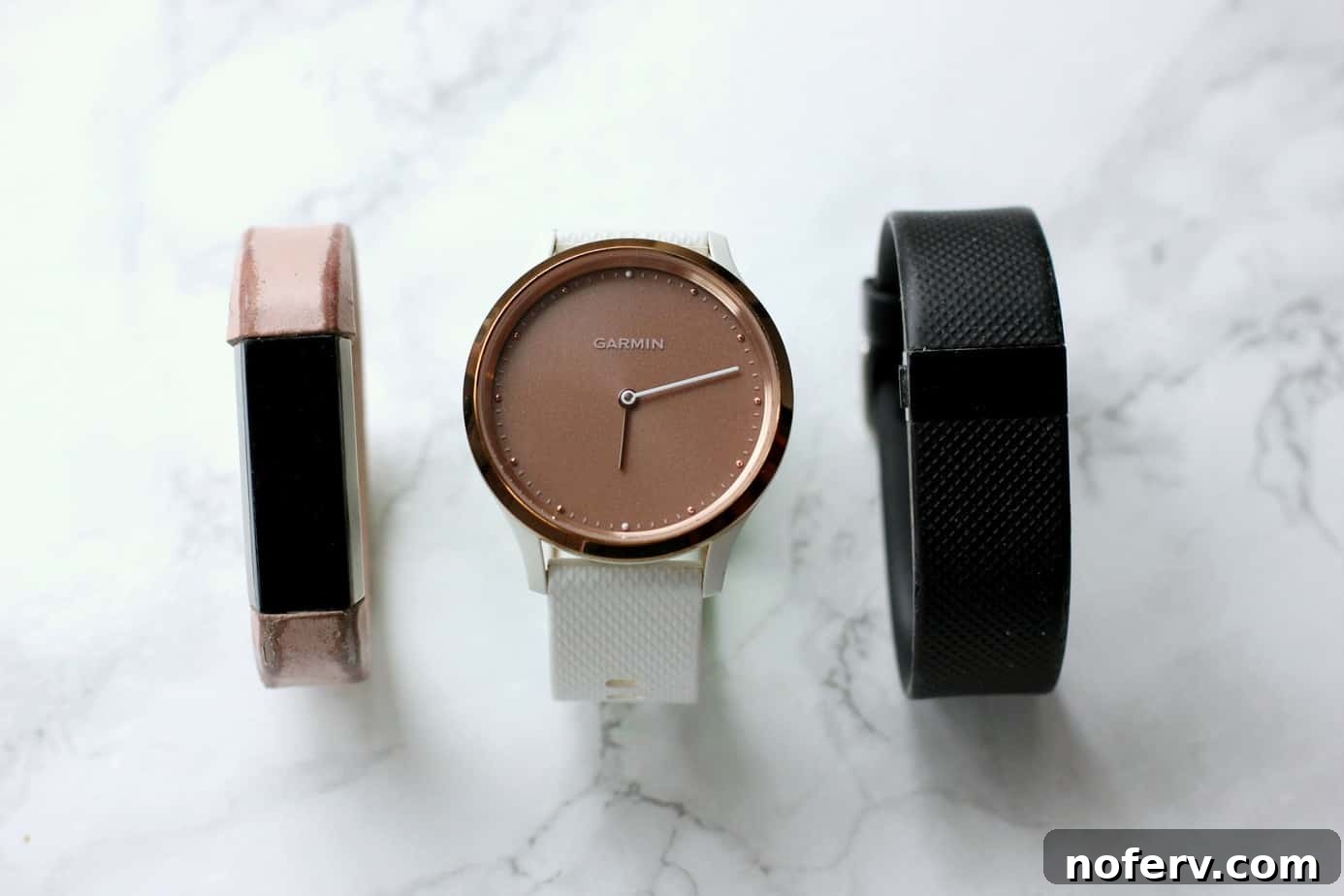
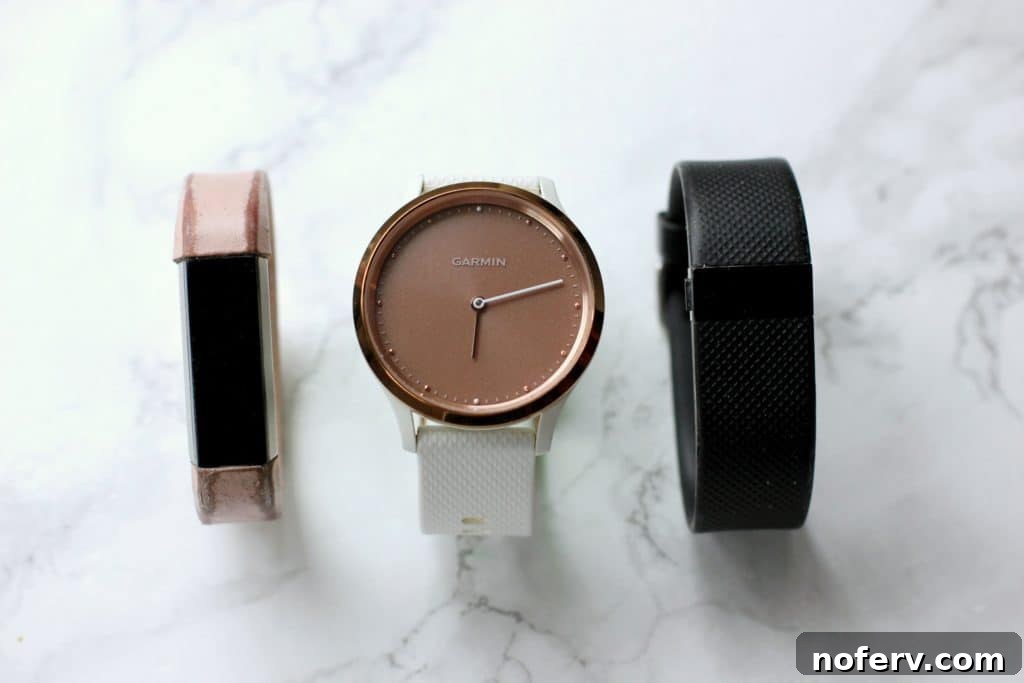
When choosing a fitness tracker, appearance and comfort are paramount, especially for daily wear. My journey began with the Fitbit Charge HR, a device that, while functional, wasn’t celebrated for its aesthetic appeal. It featured a somewhat bulky design and lacked the versatility of interchangeable bands, presenting itself in a rather uninspired matte black with a small, rectangular display. This utilitarian design, though effective for tracking, often felt more like a piece of sports equipment than a stylish accessory.
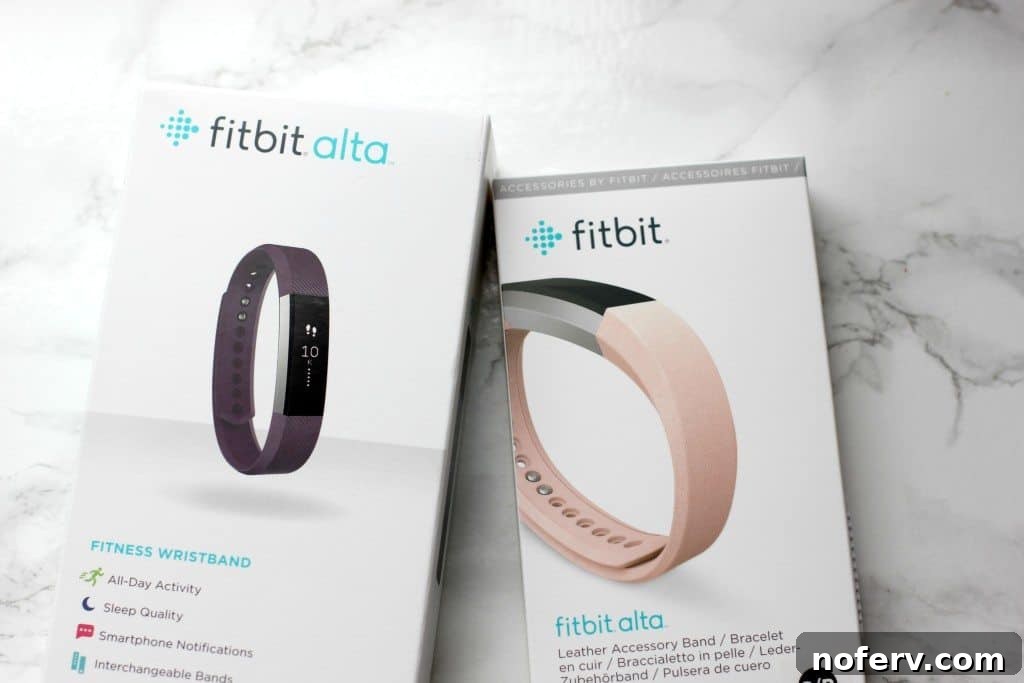
After a couple of years, I upgraded to the Fitbit Alta, a significant improvement in terms of design. The Alta’s slim profile and the option for interchangeable bands made it much more palatable for everyday wear. It no longer felt like a cumbersome gadget strapped to my wrist. I experimented with various bands, including durable and easy-to-clean black and purple rubber options, and a more elegant pink leather band. While the pink leather band was undeniably my favorite for its sophisticated look, it proved less practical, getting dirty quite easily and showing wear after just a few months. A notable limitation of my Alta model at the time was the absence of a heart rate monitor, which meant I had the standard Alta. The display, larger than the Charge HR’s, required a tap to activate, a feature that could occasionally be frustrating when the taps weren’t consistently registered.

Garmin, on the other hand, traditionally offered a range of robust, “sporty” designs that often veered towards clunky. However, their more recent Vivoactive and Vivomove lines have revolutionized their aesthetic appeal. In my opinion, these newer models are simply beautiful. The sleek, hybrid smartwatch design of the Garmin Vivomove HR, especially with its elegant rose gold watch face, was the primary driver behind my switch from Fitbit. It presented a level of sophistication and versatility that I hadn’t found in Fitbit’s offerings at the time. While slightly larger than my previous trackers, this was a minor trade-off for its stunning appearance. The white rubber watch band, despite its light color, has proven surprisingly easy to maintain and looks pristine even after six months of continuous wear, showcasing Garmin’s commitment to quality and practical design.
The choice between Fitbit and Garmin in terms of appearance often boils down to personal style and intended use. Fitbit tends to offer more discreet, activity-focused designs that blend into an athletic lifestyle, while Garmin has successfully bridged the gap between a high-tech fitness device and a conventional, stylish wristwatch, particularly with its Vivomove series. For those prioritizing a sophisticated look without compromising on core fitness tracking, the newer Garmin models certainly make a compelling case.
Fitbit vs. Garmin: User Interface and App Experience
Both Fitbit and Garmin excel in providing intuitive and user-friendly mobile applications that seamlessly sync with your smartphone. These apps serve as the central hub for all your health and fitness data, presenting key metrics such as steps taken, heart rate, calories burned, floors climbed, and sleep patterns in an easily digestible format. The dashboards are typically customizable, allowing users to prioritize the information most relevant to their individual goals.
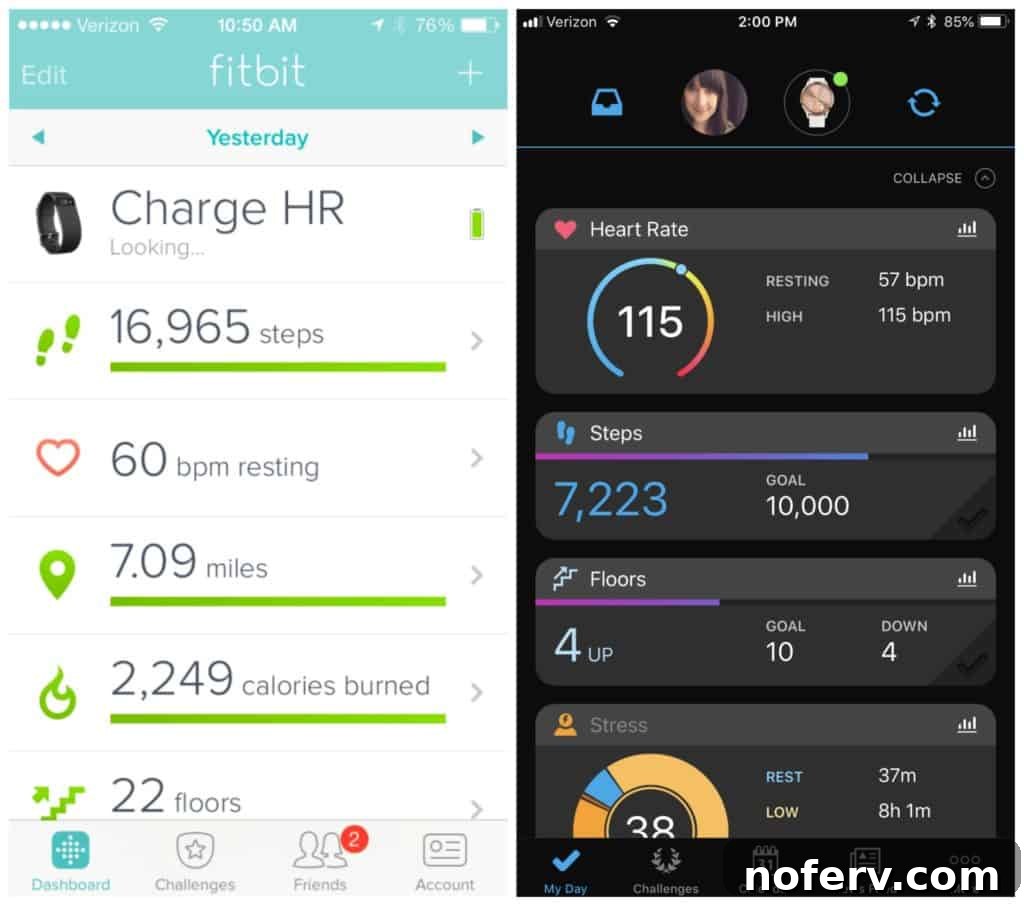
One distinguishing feature of Garmin’s interface is its advanced stress tracking option. This metric aims to quantify your body’s stress levels throughout the day and identify periods of “restful moments.” While an interesting concept, I personally haven’t found this feature to be consistently helpful or actionable in my daily routine. Fitbit has also ventured into stress metrics recently, but as it wasn’t available on the specific Fitbit models I used, I cannot offer a direct comparison of its effectiveness. However, the continuous evolution of these features highlights both brands’ commitment to holistic health monitoring beyond basic activity tracking.
When it comes to sleep tracking, my experience suggests that neither Fitbit nor Garmin achieves perfect accuracy. I frequently wake up during the night, and these disturbances are rarely registered with precision by either device. Nevertheless, I recall the Fitbit being marginally more accurate in discerning between periods of actual sleep and wakefulness, offering a slightly more reliable overview of my sleep architecture. Both apps allow users to delve deeper into specific data categories by simply tapping on them. For instance, you can examine historical heart rate data, detailed sleep stages, or trends in your daily step count. In terms of stair count, I found Fitbit to be marginally more accurate than Garmin, though both devices occasionally provided readings that felt significantly off. For me, stair count isn’t a critical metric, so its occasional inaccuracies don’t overly impact my overall satisfaction.
Beyond core metrics, both platforms offer varying levels of smart features. Notifications from your smartphone (calls, texts, app alerts) are generally well-integrated into both ecosystems, though the visual presentation and actionable options (like quick replies) can differ by model. Garmin, with its strong GPS capabilities, often provides more detailed outdoor activity tracking and mapping features, which are invaluable for runners and cyclists. Fitbit, on the other hand, frequently integrates robust food logging and calorie management tools within its app, making it a comprehensive solution for weight management. The responsiveness of the on-device display, whether touch or physical buttons, also plays a crucial role in the user experience, with newer models from both brands generally offering smoother interactions. Ultimately, while both offer solid app experiences, Garmin often caters to a more data-intensive user, while Fitbit aims for a broader, more user-friendly health management approach.
Fitbit vs. Garmin: Community and Challenges
A significant aspect of fitness tracking for many users is the motivational power of community and friendly competition. Both Fitbit and Garmin recognize this and offer robust “challenge” features, allowing users to invite friends and participate in step and activity-based competitions. This social element can be a powerful driver for consistent engagement and reaching fitness goals.
During my time as a Fitbit user, I was an avid participant in these challenges and thoroughly enjoyed them. The Fitbit app provided a vibrant and engaging user interface for challenges, making it easy to track progress, cheer on friends, and climb the leaderboard. Furthermore, a large proportion of my social circle owned Fitbits, which meant there was always someone available to join a challenge, fostering a strong sense of collective motivation. Fitbit also incorporates a fun gamification element with its various “badges.” These virtual awards celebrate milestones like walking the equivalent distance of the Great Wall of China or climbing enough stairs to reach the summit of the Eiffel Tower. While many of these badges are purely for amusement, they offered a delightful sense of accomplishment and encouraged me to push my limits, turning daily activity into a playful quest for new records.
In contrast, my experience with Garmin’s challenge features has been less enthusiastic. I’ve only attempted a challenge once, and I found the user interface to be less intuitive and engaging compared to Fitbit’s. Additionally, my immediate social network comprises fewer Garmin owners, which inherently limits the pool of potential challenge partners. This lack of a strong existing community within my personal connections diminished the appeal and motivational impact of Garmin’s challenges for me.
Overall, for casual users and those who thrive on social motivation and gamified fitness, Fitbit’s challenge ecosystem felt more robust and enjoyable. Its extensive user base and engaging interface create a more dynamic and accessible platform for friendly competition. However, for serious runners or athletes who might be part of more specialized training groups, Garmin’s focus on detailed performance metrics and advanced training programs might offer a different, more serious type of community engagement. It largely depends on what kind of motivation and social interaction you seek from your fitness tracker.
Fitbit vs. Garmin: Cost and Value Proposition
The financial investment in a fitness tracker is a crucial consideration, and both Fitbit and Garmin offer a wide spectrum of pricing, catering to different budgets and feature requirements.
Fitbit is renowned for its accessibility, with basic models (often without a digital interface, focusing solely on core tracking) starting as low as $59.99. Their most advanced smartwatches can reach up to $299. With approximately eight distinct models available, Fitbit makes it relatively easy for consumers to find a device that fits their specific feature needs and price range. To assist with this decision, Fitbit provides a very helpful
comparison chart
on their website, which I found invaluable when navigating their sometimes overwhelming array of options. This transparency and guided selection process significantly enhance the purchasing experience.

Garmin, conversely, offers a much broader and more complex product lineup, featuring over 30 different options. This extensive selection can make the search for the perfect device more challenging. The Vivo series is generally considered their most direct competitor to Fitbit’s offerings, striking a balance between fitness tracking and everyday wearability. However, Garmin’s range extends significantly further, with some “luxury” or specialized models reaching prices upwards of $899. This makes them a considerable investment, often targeting very specific niches. For instance, certain Garmin models boast unique functionalities like comprehensive boat connectivity – a feature that underscores their focus on highly specialized athletic and outdoor activities. Consequently, Garmin offers fewer inexpensive options, positioning itself more towards serious marathon runners, triathletes, and outdoor adventurers who require advanced GPS, detailed performance metrics, and rugged durability. The value proposition here is tied to professional-grade features and resilience, justifying the higher price point for a dedicated athletic audience.
In essence, Fitbit targets the mass market, offering reliable and user-friendly fitness tracking at accessible price points. Garmin, while having entry-level options, primarily caters to a more demanding clientele seeking advanced performance analysis, robust outdoor capabilities, and a willingness to invest more for specialized features. This distinction in pricing and features largely dictates which brand will offer better value for different types of users.
Fitbit vs. Garmin: Band Options and Customization
Both Fitbit and Garmin understand the importance of personalization and practicality when it comes to wearable technology. Consequently, both brands offer a wide array of interchangeable bands, allowing users to customize their device’s look and feel to match different outfits, occasions, or activities. This feature is not only beneficial for stylistic reasons but also for hygiene, as bands can accumulate grime and wear over time.
In my experience, the standard bands that come with both Fitbit and Garmin devices are generally quite durable and well-suited for everyday wear and exercise. However, I particularly appreciated the option to swap out the standard silicone band for a leather one. This simple change instantly transformed the device from a distinctly “fitness tracker” aesthetic into something that resembled a more traditional, stylish watch, making it suitable for professional or formal settings. The availability of various materials—silicone for workouts, leather for elegance, metal for a premium feel—ensures that users can truly make their device their own.
In terms of pricing and style, the interchangeable bands from both brands are quite comparable, offering a diverse range of colors and materials at similar price points. This makes customization an affordable and accessible option for most users. Some popular examples include:
- Fitbit White Leather Band
- Garmin Pink Leather Band
The ease of changing bands is also a significant factor. Both ecosystems generally feature intuitive quick-release mechanisms, allowing users to switch bands in seconds without any special tools. This flexibility ensures that your fitness tracker can seamlessly transition from a morning run to an evening event, maintaining both functionality and fashion.
Overall Comparison: Fitbit vs. Garmin – Which One Is Right for You?
After extensive personal use of both Fitbit and Garmin devices, my overall assessment is that Fitbit generally aligns better with the needs and budget of a casual user or someone who isn’t a hardcore runner or athlete. The Fitbit ecosystem offers a more approachable interface, making navigation and data interpretation straightforward for the average individual. It provides a comprehensive suite of features for daily activity tracking, sleep monitoring, and general health awareness without overwhelming the user with overly complex metrics. The strong community features and engaging challenges also add a significant motivational boost for many.
Garmin, while equally impressive, clearly caters to a more specialized audience. It boasts a wider array of advanced functionalities and technical specifications, particularly appealing to serious athletes, outdoor enthusiasts, or those requiring precision data for training. However, this often comes with a higher price tag and a steeper learning curve, making its interface and vast features potentially more complicated for a casual user. Its strength lies in detailed GPS tracking, robust performance analytics, and specialized activity profiles that cater to specific sports like running, cycling, swimming, and even golf.
My personal decision to switch to Garmin was primarily driven by the striking aesthetics of the
Vivomove HR
. Its ability to seamlessly blend the functionality of a fitness tracker with the elegant appearance of a traditional watch was a game-changer for me. Despite my admiration for its design, I do genuinely miss the vibrant community and engaging challenges that Fitbit so effectively fostered.
Ultimately, the choice between Fitbit and Garmin boils down to your personal priorities and lifestyle.
If you are seeking a reliable, user-friendly, and cost-effective fitness tracker for everyday health monitoring, casual activity, and strong community engagement, Fitbit is an excellent starting point.
However, if you require advanced features for serious athletic training, precise GPS tracking, a more durable build for outdoor adventures, or simply prefer a fitness tracker that embodies the sophisticated look of a traditional watch, then exploring Garmin’s extensive range would be highly recommended.
Both brands offer exceptional wearable technology, but their distinct philosophies and target markets mean that the “best” choice is truly a personal one, dependent on your individual fitness journey and aesthetic preferences.